
Sculpting Souls: A Journey Through Southern Africa’s Living Stone

“In Southern Africa, sculpture isn’t just art. It’s soul, shaped by hand.”
Zimbabwe: Where the Rock Remembers
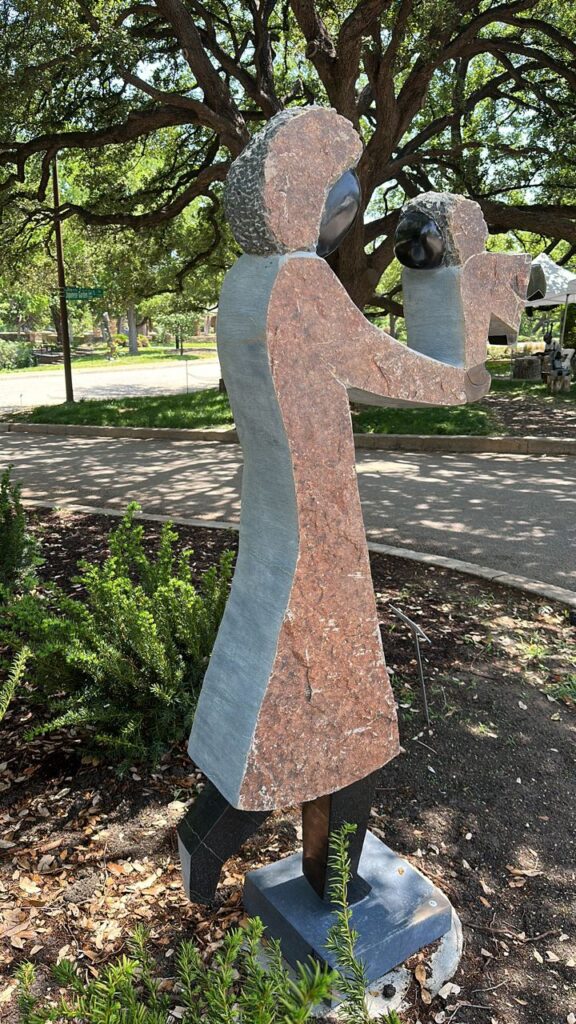
You don’t just see sculpture in Zimbabwe. You feel it.
This is a land where stone remembers. Even the country’s name traces back to Great Zimbabwe — an ancient stone city still echoing with secrets. From these ruins came the soapstone birds, carved nearly a thousand years ago, still standing as silent sentinels on the national flag.
Fast-forward to the 1950s, when a new generation of artists began coaxing stories from rock once more. Joram Mariga, the pioneer, turned humble serpentine stone into a storyteller’s tool. His legacy grew as others followed — among them, Nicholas Mukomberanwa, whose works blend Shona spirituality with modernist grace.
And then came Dominic Benhura.
If Mariga was the father of Zimbabwean stone sculpture, Benhura is its playful soul. His iconic work “Swing Me Mama” captures joy in mid-air — a mother swinging her child, both grinning, arms stretched wide. It’s impossible not to smile when you see it.
In places like Tengenenge, entire villages are dedicated to the chisel. Art isn’t confined to galleries — it spills into the streets, gardens, and even the pathways between homes.
South Africa: The Pulse of Protest and Play
Where Zimbabwe whispers in stone, South Africa sings — sometimes softly, sometimes with a roar.
From the smooth curves of Zulu woodcarvings to the striking metalwork of urban protest art, sculpture here wears many faces. One moment you’re admiring a carved giraffe in a roadside market. The next, you’re staring at a towering sculpture built from scrap — speaking truth to power.
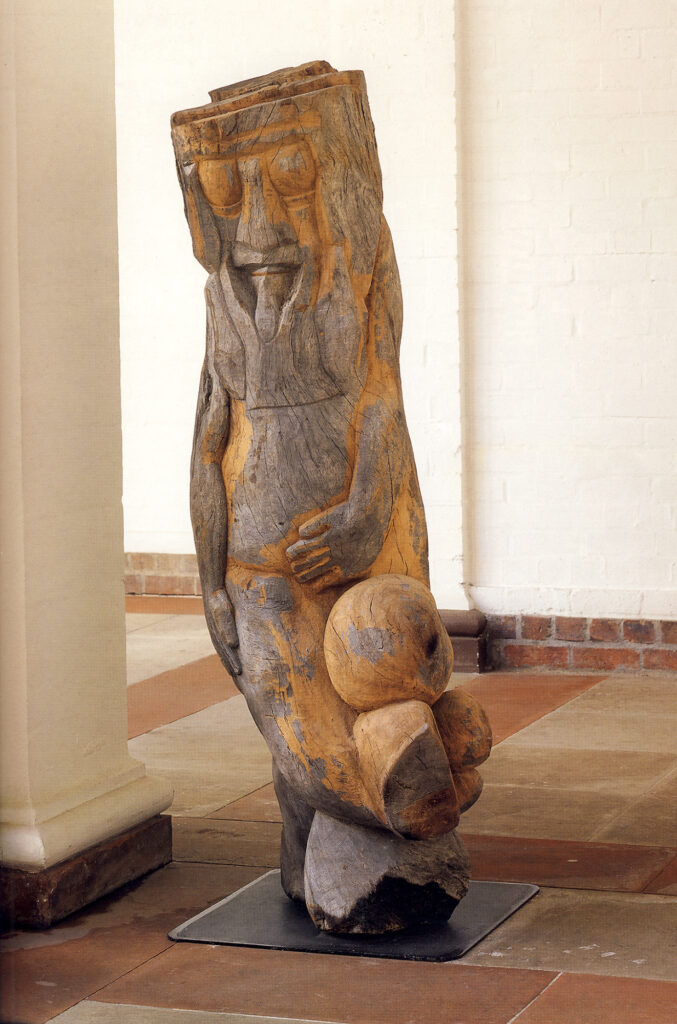
Take Jackson Hlungwani, a priest-artist from Limpopo, who carved biblical stories into local wood. His “New Jerusalem Altar” is both spiritual and surreal — lions beside angels, fish beside prophets.
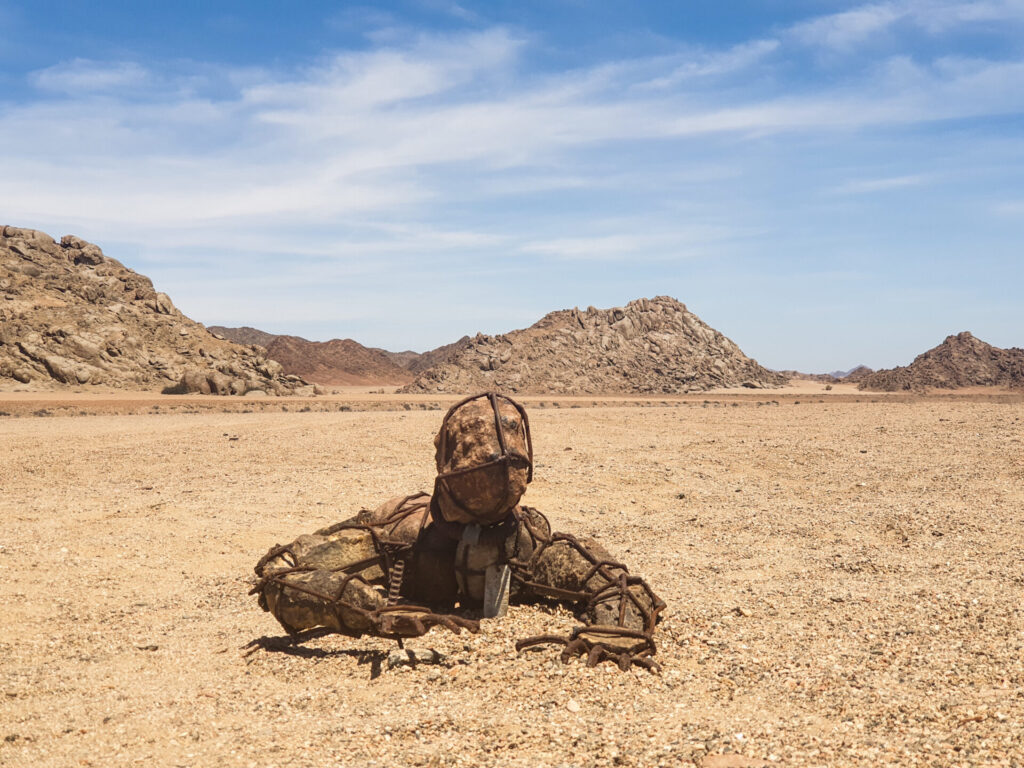
Then there’s Willie Bester, who uses found objects to sculpt the past and present of South Africa’s political journey. His piece “Migrant Worker” speaks volumes without a single word — chains, metal, and rusted tools tell a story of struggle, strength, and survival.
Sculpture here isn’t just about form. It’s about freedom.
Botswana & Namibia: Shaped by Nature
In Botswana and Namibia, sculpture takes its time — just like the deserts and deltas that shape the land.
Along the Okavango or beneath mopane trees, local artists carve animals and ancestral figures from hardwood. Their tools are often simple — knives passed down through generations — but the results are profound. A single piece of wood becomes a village elder, or a family of elephants mid-stroll.
Namibian sculptors, especially near Windhoek, return to stone. Their works often appear half-formed, as if the rock itself is waking from a dream. Faces emerge from marble. Spirits press out from soapstone. The earth tells its own slow story here.
Mozambique: Dancing with Spirits
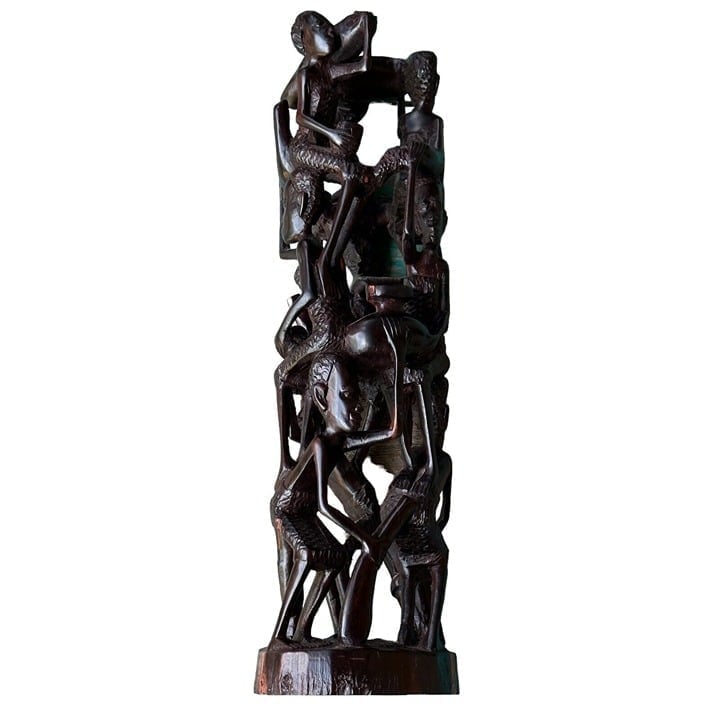
Mozambique’s Makonde artists don’t just carve figures. They carve energy.
Their sculptures — especially the surreal shetani — dance somewhere between nightmare and prayer. With twisted limbs, multiple heads, and flowing forms, these dark-wood figures represent spirits both mischievous and divine.
One Makonde specialty is the “Tree of Life” — a single chunk of ebony transformed into a swirl of interconnected people, rising from a trunk like memory made solid.
These carvings have traveled the world, but they remain deeply Mozambican — rooted in story, ancestry, and unseen forces.
One Land, Many Hands
Despite their differences, Southern African sculptors are united by one thing — their connection to the land.
The stone isn’t just material. It’s memory. The wood isn’t just a resource. It’s a lineage. The wire and scrap metal? That’s reinvention.
Whether in a Harare workshop, a Johannesburg market, or a Namibian roadside stall, sculptors here are custodians of stories. They speak through hands, not words. Through shadow and curve, not canvas.
So if you ever visit, don’t just go to the big museums. Stop at the stalls. Wander into the villages. Ask questions. Hold a sculpture, if they’ll let you.
And listen.
You might just hear the heartbeat of a continent.
